Studying the retablos of Silang, Cavite all the more validated the richness of Philippine art and firmly established the long-standing relations between the country and Mexico.
Tracing Philippine Colonial Arts: The Heritage Provenance of the 17th Century Retablos of Silang, Cavite by Philip N.A.L. Medina tackled concepts that dealt with the influence and/or presence of Spanish colonial art in Philippine art, particularly religious objects and structures.
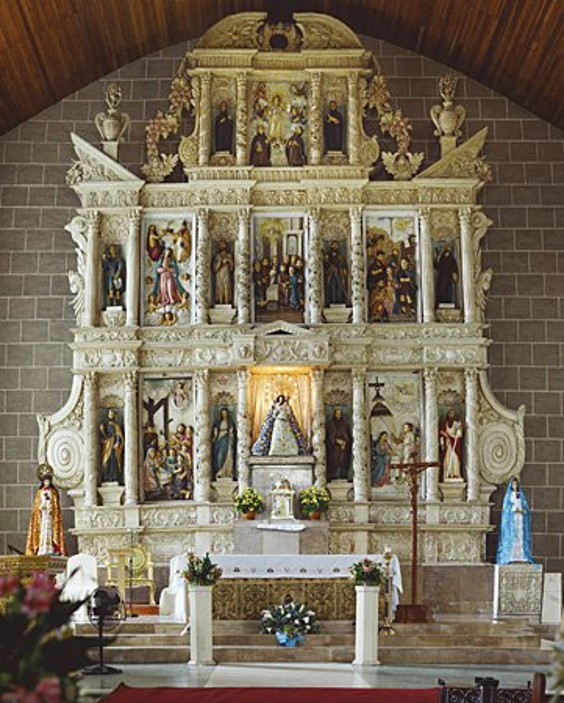
Medina focused on the bas reliefs or retablos of Silang in Cavite. He concluded that these are monuments “attesting to early global interconnectedness of Spain, Mexico, and the Philippines, as well as other cultures like the Jewish, Chinese, Japanese, Malay, Muslim, and Flemish.”
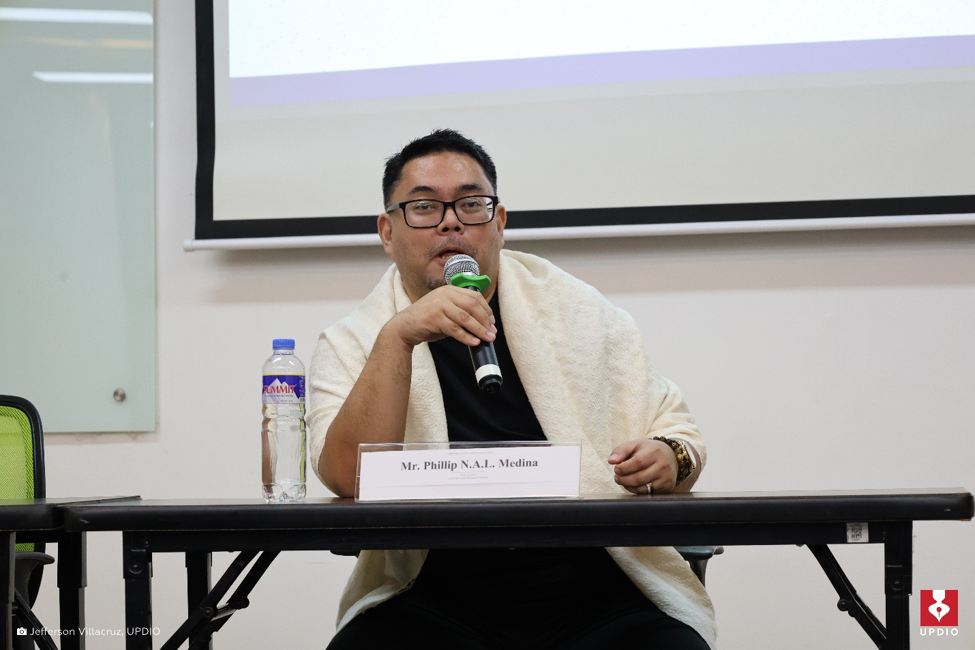
He raised the concern of “conscious pastiche” on art history.
In defining pastiche, Medina said “it is actually [an] intentional creative technique of architectural borrowing.” He posited that this should not be seen negatively but a sign of high praise, of paying homage.
Conscious pastiche then is borrowing an art or architecture, knowing full well its importance, use, and purpose. According to Medina, this yields “a new, coherent visual synthesis unique to that particular regional meeting or encounter.’
He suggested that rather than only recognizing the concept of what is pure, there should be an appreciation of various nuances, what he called as the “rewrite of colonial art history in the form of inclusive, intercontinental narrative.”
“Tracing heritage provenance, we should shift credit from the Spanish patrons to include Flemish engravers, Chinese artisans, and Filipino carvers [and] also the implementation of censorship that happened in the province of New Mexico,” Medina said.
Medina’s lecture presented both historical and artistic exposition. He presented the history of the town of Silang in Cavite, the influence of the Jesuits to the town and on Philippine art.
“According to Father Rene Javellana, a Jesuit scholar on retablos, they finished the retablos around 1663, with the representation of the Santo Niño de Ternate at the top of the altar mayor,” Medina said. He continued that there were three retablos “the altar mayor in the middle, the left side or the Gospel altar, and the Epistle, the right side. Now, these colonial religious masterpieces, 17th century woodcarving, is used not just for architectural purposes as design or for interior, but also for catechetical instruction.”
By tracing Philippine colonial art, Medina revealed that artworks and structures in Silang during the 17th century were surely made from Philippine hardwood.
“Early deforestation happened in the locales of Cavite and Laguna because the colonial settlers would need large amounts of wood for construction of churches, civic buildings, and of course, the galleons,” Medina said.
Medina shared that the Jesuits in their evangelization of Silang exercised influence in the province’s art and architecture, and this was very evident in the retablos.
As he puts it, “The Jesuit enterprise is not just about mission, they’re into production of art, production of books, and they have their partners.”
Where then is the Mexico connection or how then does Philippine-Mexico relation come into play?
Medina would explain, the books that the Jesuits would bring to the country “would travel from Europe and would go to Mexico, [or] filtered through Mexico because most of these missionaries would be trained in Mexico in preparation for the actual mission in the Philippines.”
“Wala naman talagang Mexican priest or Mexican Jesuit na pumunta. Most of them are Spaniards, but again, these Spanish missionaries were trained in Mexico. So they were inculcated in Mexico on what to do in the mission in the Philippines—and everything was regulated. Even the books that they will bring. There was a strong censorship. [The Jesuits] were European-born, mostly from Spain and Italy, but they were dispatched via the via the Province of New Spain (Mexico),” Medina said.
He further explained that during the early colonial conquest, the experience of mixing elements of a particular community was previously tried and tested by Spain in Mexico “what has been filtered in Mexico is being replicated in the Philippines.”
As an example, Medina mentioned that the Anunciation relief of Silang came “from the particular books that were brought into the Philippines.”
Medina’s lecture pointed out that Philippine colonial art was never a passive imitation, but rather an “active, conscious synthesis, a communicator of history and art,” where elements of Mudéjar or the Islamic style of Spanish art and Mestizaje or the Mexican side of Spanish art exist along with the concept of Philippine Baroque art.
Medina is a PhD candidate in History and a Master of Art in Philippine Studies graduate at UP Diliman (UPD).
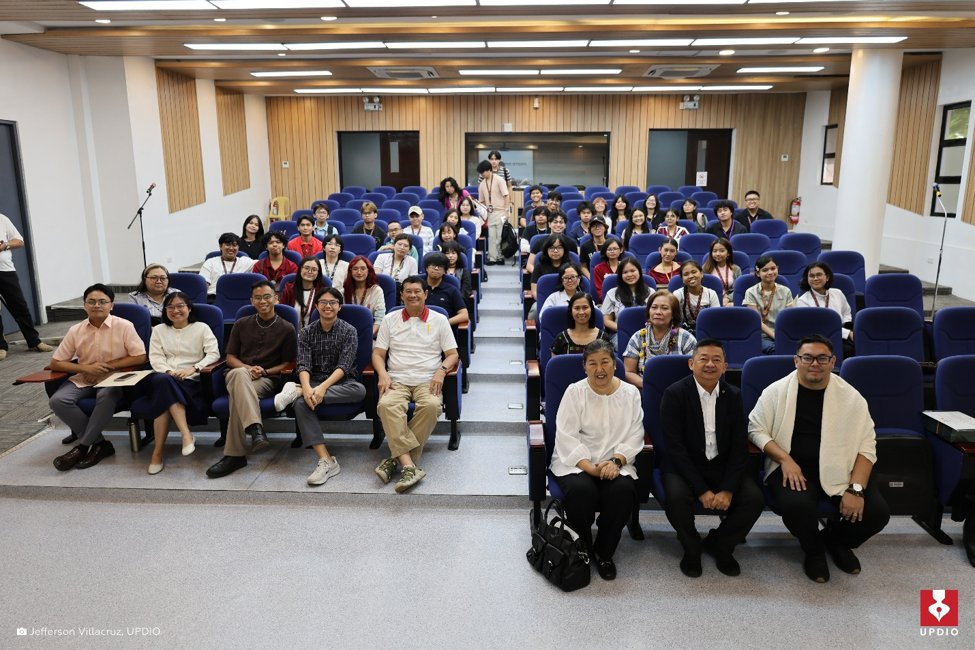
Tracing Philippine Colonial Arts: The Heritage Provenance of the 17th Century Retablos of Silang, Cavite was presented at La Historia Olvidada: Filipinas-Mexico 2026, a colloquium series on Philippine-Mexico Relations, at the Pilar Herrera Hall of the Palma Hall.
This series was organized by the UPD Department of History (DHist) in partnership with the Philippine Embassy in Mexico, the Philippine Academic Consortium for Latin American Studies, El Collegio de San Luis, and the Philippine-Mexico Studies Program, National Autonomous University of Mexico (UNAM).
Also present at the colloquium were DHist Chair Raul V. Pagunsan; Cheek S. Fadriquela, PhD, assistant professor at the University of Santo Tomas, who also gave a lecture at the colloquium; and Kristyl Obispado, PhD, associate professor at DHist, who spearheaded the colloquium.