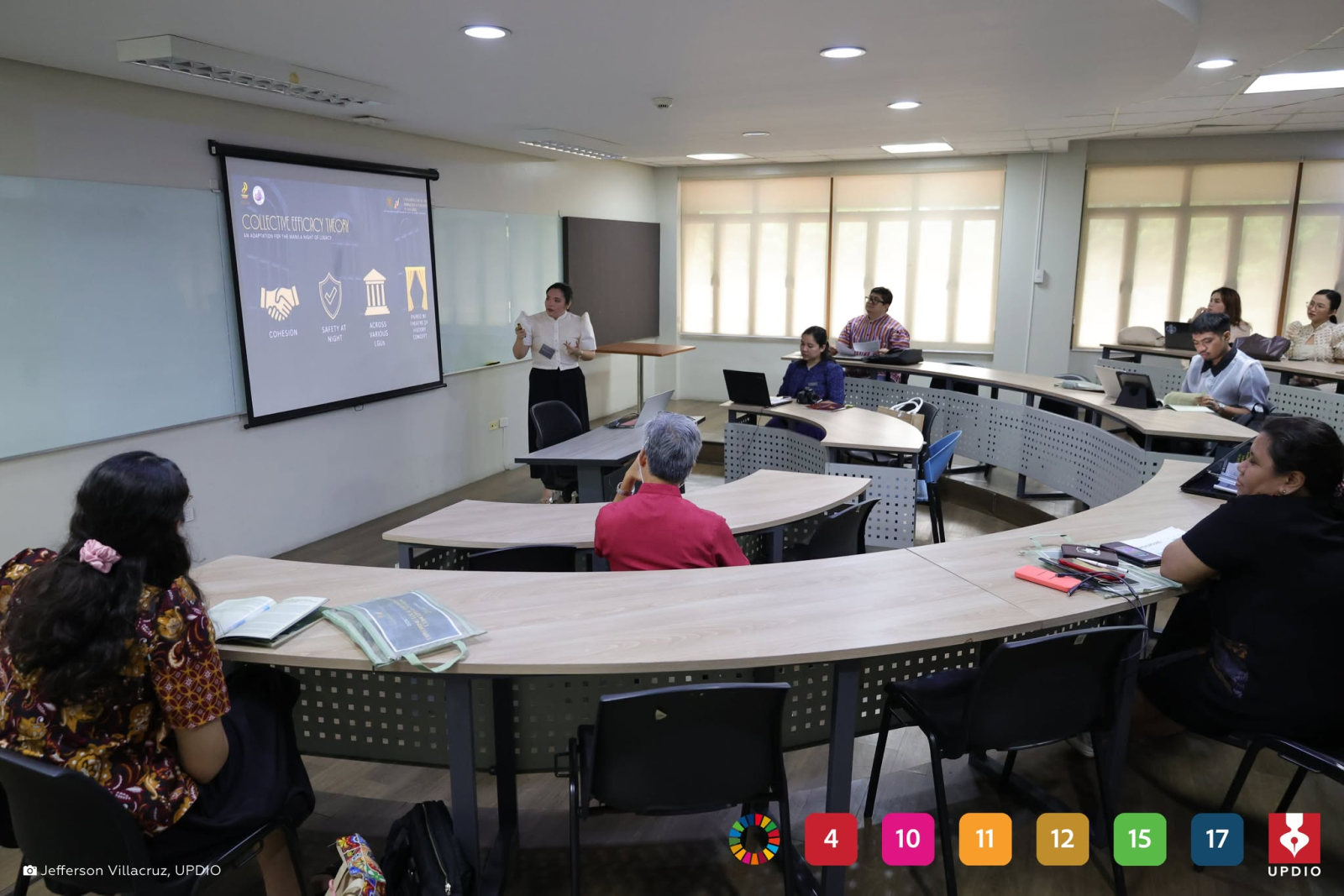
Marking 50 years of tourism education and the observance of Tourism Month in September, the UP Asian Institute Tourism (AIT) recently held its inaugural 2026 Graduate Student Conference with the theme Exploring Local and Indigenous Concepts in Tourism.
UP Diliman (UPD) Chancellor Edgardo Carlo L. Vistan II emphasized the need to rethink tourism knowledge by moving beyond Western frameworks and recognize Filipino, indigenous, and local knowledge systems as valuable foundations for more equitable and locally responsive tourism theory, policy, education, and practice.
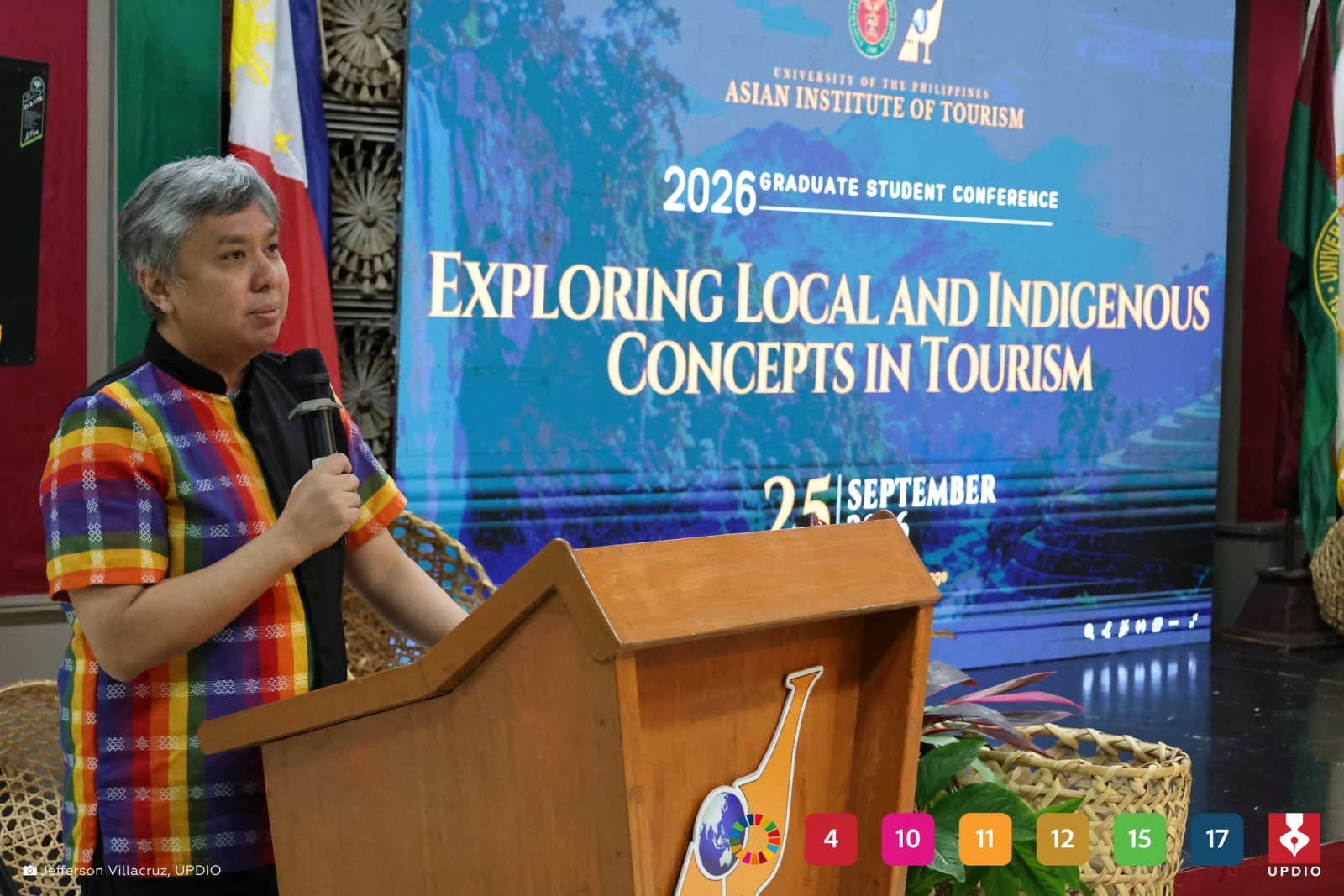
“What happens when we begin not with imported theory, but with the concepts communities themselves have used for generations to care for their land, their heritage, and their visitors? What happens when Filipino values and indigenous worldviews are treated not as case studies to illustrate someone else’s theory, but as theory in their own right—as frameworks capable of shaping policy, curriculum, and practice? These are not simply academic questions. These are questions about authority, about paradigms—about who gets to define what tourism is for, and who gets to decide how a community’s culture and land are represented and shared with the world,” said Vistan.
The conference showcased two keynote addresses: Navigating Heritage, Islanding and Indigeneity in Maritime Southeast Asia by Hamzah Muzaini and (Re)shaping Tourism in Indigenous Sovereignty Principles by Leah E. Abayao.
A professor and cultural geographer at the Department of Southeast Asian Studies of the National University of Singapore (NUS), Muzaini examined how land reclamation and offshore development in Singapore have transformed its islands. Land reclamation and offshore development resulted in the displacement of communities and the loss of cultural knowledge and heritage.
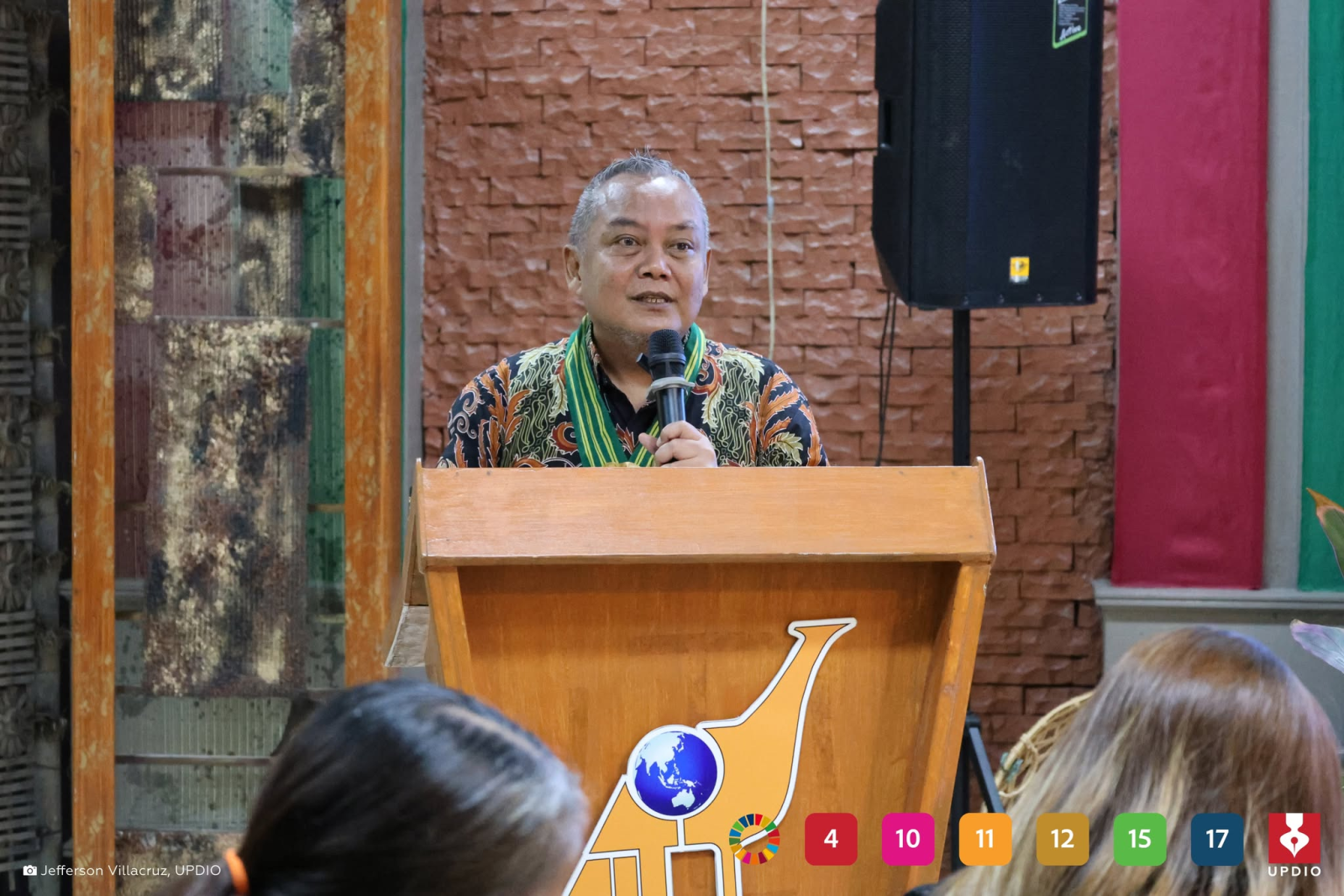
Drawing from more than a decade of community work, Muzaini introduced islanding as an approach to recovering the histories and identities of islands that have been merged, altered, or made inaccessible. Islanding, as he explained, is a way ofrecovering and restoring the identities, histories, and cultural connections of islands that have been altered, merged, or erased by land reclamation and development.
“Instead of making it into one island, islanding can refer to making into many islands. This is important because with land reclamation, identity of islands have disappeared. So, we need to bring back the identity of these islands through projects so that we do not forget them,” said Muzaini.
Muzaini then emphasized a broader view of islands as places where people, culture, the sea, and nature are closely connected. Drawing from heritage projects and community activities, he highlighted efforts to preserve island stories and help younger generations reconnect with their maritime roots. He also called for tourism and development plans to consider displaced island communities and recognize former residents, their descendants, and others whose lives remain tied to the sea.
For her part, Abayao urged tourism practitioners to rethink tourism beyond leisure and consumption, emphasizing the need for community-centered programs that respect culture as a living and evolving practice.
The vice chancellor for academic affairs and history professor at UP Baguio, Abayao emphasized that the programs should empower communities to shape tourism initiatives, protect indigenous knowledge, strengthen local livelihoods, and ensure that economic benefits reach the communities themselves.
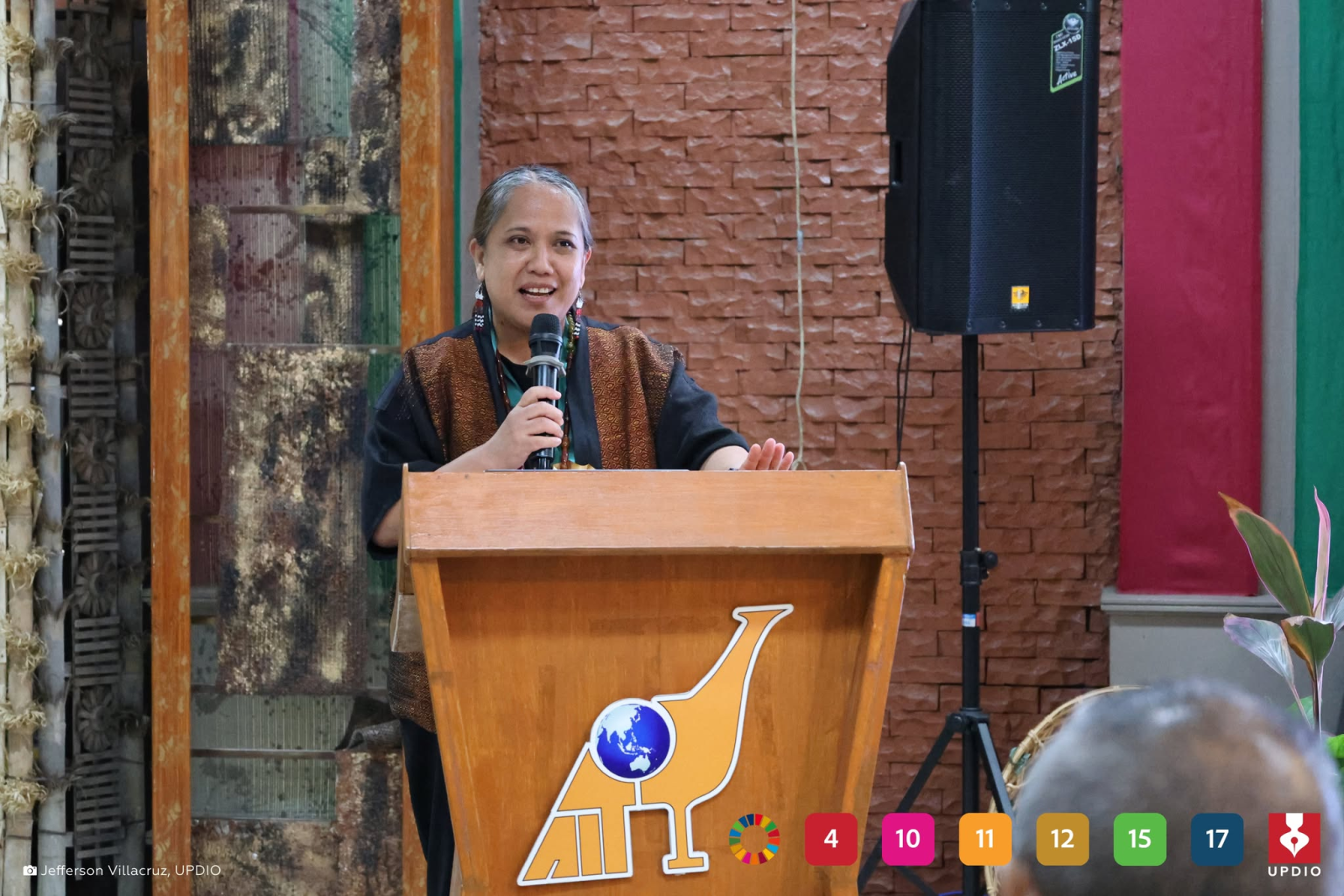
Ultimately, Abayao explained that tourism should foster cultural diversity, community well-being, and meaningful relationships between visitors and host communities.
“For the future of tourism, we go back by changing the mindset of not looking at tourism as leisure or luxury. Create a tourism program that has a mission to actually go deeper into knowing our culture, and history that informs the kind of relationship or relations that we want to make with communities,” Abayao said.
She added, “building one nation does not mean going against diversity. We must build cultural knowledge that defines the Philippines, and a cultural diversity that the Philippines is known for.”
Meanwhile, President Raymundo Rovillos of the Pangasinan Polytechnic College and Felipe Jocano Jr., an assistant professor at the UPD Department of Anthropology, joined the discussions on indigenous peoples and tourism development by drawing from their research and community engagement.
The conference last Sept. 25 at the AIT Lounge also featured parallel sessions where 17 graduate students presented their research on tourism and related fields, highlighting how local and Indigenous knowledge can help build tourism practices that are more inclusive, equitable, and responsive to community needs.