
In celebration of 80 years of diplomatic relations between the Philippines and Belgium, and the 125th anniversary of the publication of Jose Rizal’s second novel, El Filibusterismo, an exhibit entitled L’Archipel et le Plat Pays: Pages from the shared history of Belgium and the Philippines (16th-20th centuries) was recently held at the Palma Hall Lobby.
The Ambassador of the Kingdom of Belgium to the Philippines, Vladislava Iordanova, in her welcome message, underscored the five-century history of Belgian-Philippine encounters and the enduring importance of people-to-people, academic, and cultural exchanges in strengthening bilateral ties and shaping their future. Iordanova also highlighted José Rizal’s connection to Belgium, particularly his time in Brussels and Ghent, where he completed and published El Filibusterismo in 1891.
“Perhaps what I appreciate most about this exhibition is that it does not present history as something completed. Rather, it reminds us that history is still being written. I invite you to explore this exhibition with curiosity, to discover unexpected connections, and to reflect on how five centuries of encounters continue to shape our relationship today,” said Iordonova.
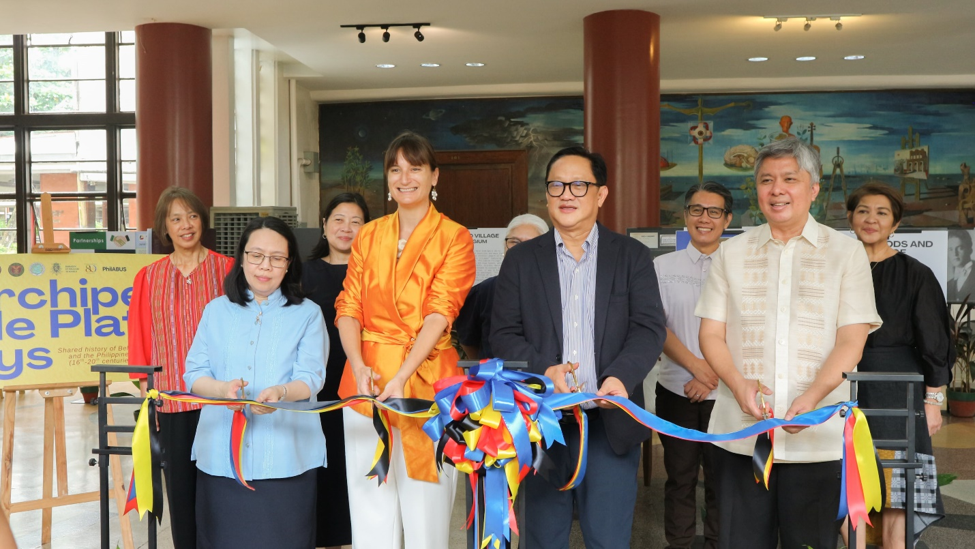
Meanwhile, UPD Chancellor Edgardo Carlo L. Vistan II highlighted the longstanding historical, academic, and diplomatic ties between the Philippines and Belgium by recalling the experiences of Rizal, Edilberto Evangelista, and Jose Alejandrino, whose studies and activities in Belgium contributed to the Philippine struggle for independence.
“These heroes, Rizal, Evangelista, and Alejandrino dedicated their lives, specifically their academic training abroad, for a significant turning point in our nation’s past. Their lives as visitors, students, and revolutionaries signify the important matters being symbolized by this exhibit today. That academic pursuits lead to significant change, whether through required literary activities, technical training in engineering sciences, or through diplomatic activities aimed at establishing a free republic for the Filipinos,” Vistan said.
The exhibition, according to Kerby C. Alvarez, PhD, professor at the UP Department of History and the exhibit curator, forms part of a continuing effort to deepen interest in and understanding of the Philippines in Belgium.
Organized by the UP Department of History, the University of Namur (UNamur), Embassy of the Kingdom of Belgium in Manila, UPD College of Social Sciences and Philosophy, the Philippine Association of Belgian University Scholars (PhilABUS), and the Joint Strategic Framework Philippines (JSFP), the exhibition is comprised of three sections.
The first section features the original exhibit from the UNamur, with English translations of the French texts provided with the Embassy’s assistance. It unfolds in six parts: “The Encounter,” “The Ambitions of Belgium,” “Rizal’s Stay in Belgium,” “The Ghent World Exhibition Affair,” “The Visit of the Crown Prince,” and “Independence and Diplomacy.”
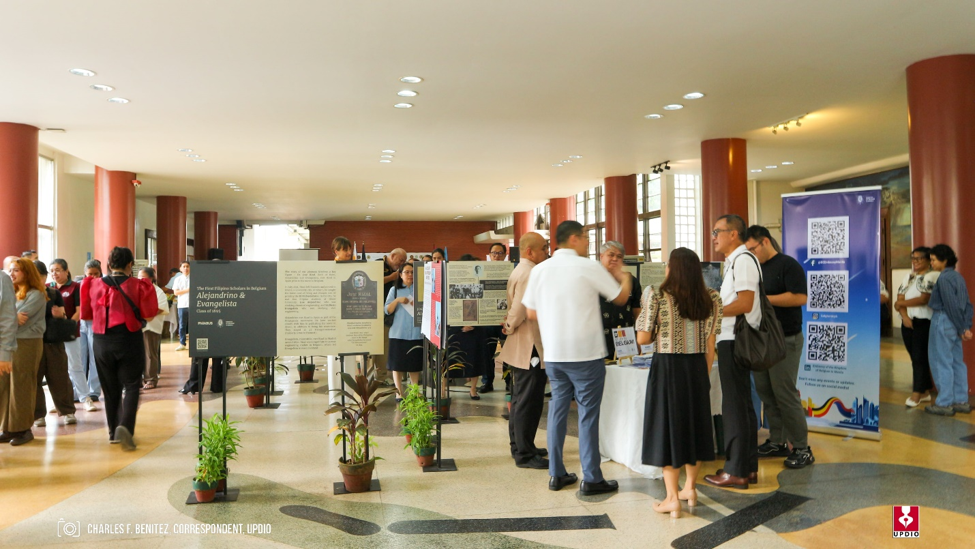
The second section, “The First Filipino Scholars in Belgium: Alejandrino and Evangelista,” highlights the lives of revolutionary heroes Alejandrino and Evangelista, who studied engineering at the University of Ghent in the late 19th century, shortly before the Philippine Revolution against Spain. The section was prepared by the PhilABUS.
The third and final section, “Partnership, Programs, and People,” features civil society initiatives marking the 80th anniversary of diplomatic relations between the Philippines and Belgium. The section was prepared by the JSFP.
Alvarez added that the exhibition was first installed in UNamur from 12 December 2025 to 5 February 2026, as part of the UNamur Philippine Studies Program––a project collaboration spearheaded by the Office of Cultural Diplomacy of the Department of Foreign Affairs, the Office of Senator Loren B. Legarda, and the Philippine Embassy in Brussels, Belgium. The UPD leg, on the other hand, ran from September 14 to 18.