
Bringing knowledge beyond the classroom and into communities, Saliksik Diwa gathered UP Diliman (UPD) extension grantees, researchers, and stakeholders from diverse disciplines to spotlight the University’s continuing work in public service and community engagement.
Eight talks by UPD Extension Grant recipients were featured at the event organized and presented by the Office of Extension Coordination of the Office of the Vice Chancellor for Research and Development.
Armada emphasized geohazards can be understood by participating through sustained engagement, hands-on demonstrations, and exercises in interpreting geophysical data. He said this was how participants in Marinduque gained a clearer picture of how active faults can generate earthquakes and cascading hazards. The knowledge that they gained strengthened local preparedness and decision-making.
Cruz talked about the DLingg project which developed an eight-topic training module on Philippine language documentation for educators, researchers, students, and members of speech communities. He also discussed the Summer Seminar in Linguistics (SSL) held from 22 to 29 May 2026. This provided participants from across the Philippines with foundational knowledge in linguistics and specialized training in language studies and documentation.
Presented in the morning were: Seismic Scanning of Active Philippine Fault Splays for Marine Geohazards (SeiScan_PH) by Leo T. Armada, PhD, an assistant professor at the UPD National Institute of Geological Sciences; Developing a Module for Philippine Language Documentation by Noah D.U. Cruz, an assistant professor at the Department of Linguistics (DLingg); Papet Pasyon: 40 Taong Panata sa Bata by Ma. Amihan B. Ramolete, PhD, a professor at the Department of Speech Communication and Theatre Arts; and the UP Center for Air Research in Urban Environment (CARE) Capacity Building Training for SUCs/LGUs/Agencies by John Richard E. Hizon, PhD, a professor at the Electrical and Electronics Engineering Institute.
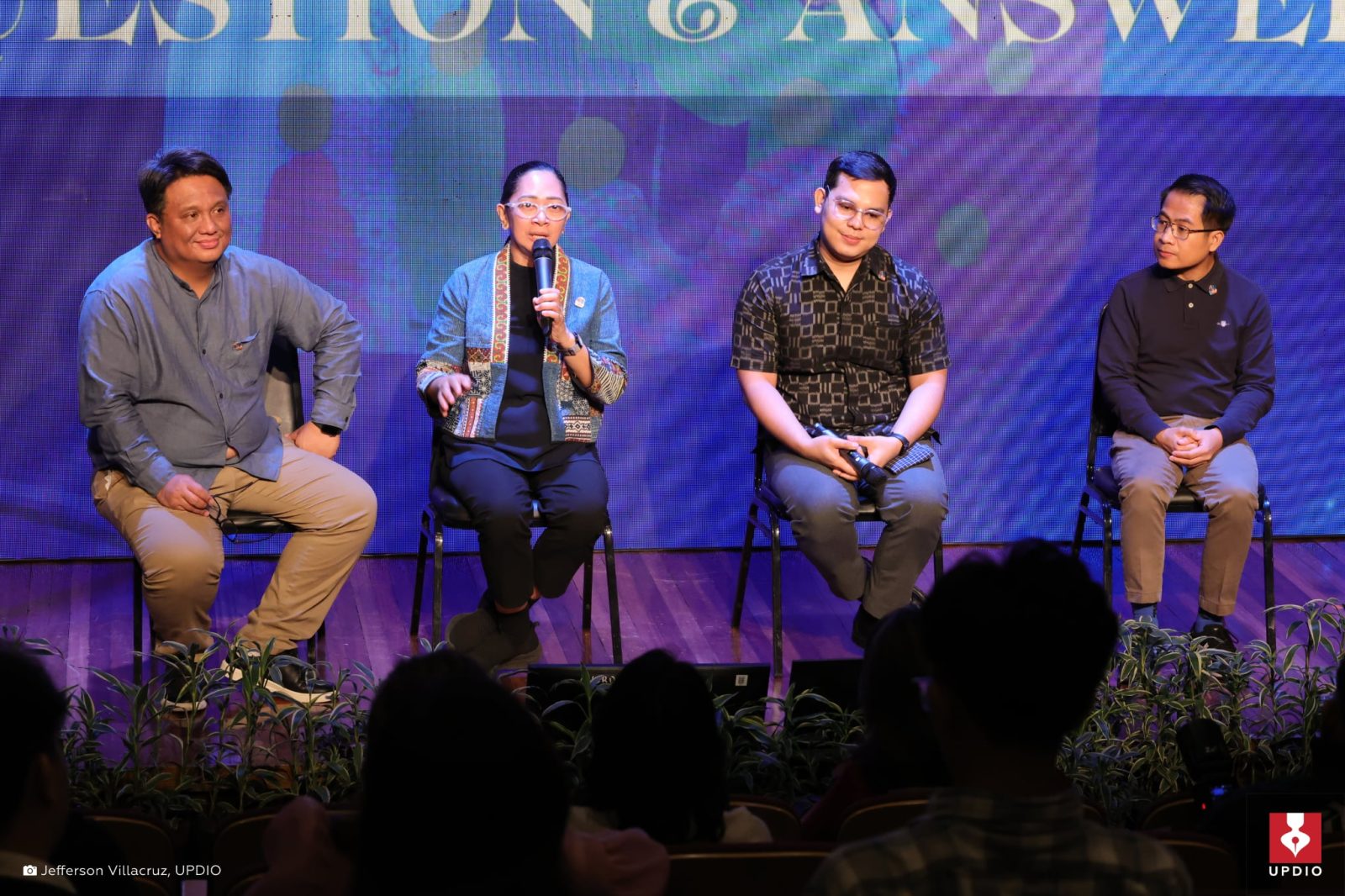
Ramolete highlighted the cultural significance of Papet Pasyon, emphasizing its role in carrying forward the legacy of National Artist for Theater Amelia Lapeña-Bonifacio and preserving Filipino puppetry for future generations. Now in its 40th year, the production brings diverse audiences together for cultural and spiritual reflection, reaffirming Teatrong Mulat’s commitment of keeping Filipino heritage alive through meaningful performance.
Hizon presented the UP CARE research group which developed locally-manufactured air quality sensors and the CARE HIVE, a cloud-based platform that helps local government units monitor pollution trends and hotspots. Hizon’s team also trained City Environment and Natural Resources Office personnel on how to use the system, and gathered user feedback to improve the design and its implementation.
Meanwhile, afternoon presentations were Pag-ugat: Identifying Halal Tourism sites from People, Nature, and Community in Tabawan and Simunul, Tawi-Tawi by Dean Giovanni Francis A. Legaspi of the Asian Institute of Tourism (AIT); LIHAL: Library of Islamic Heritage, Arts, and Language by Dean Julkipli M Wadi of the Institute of Islamic Studies (IIS); Paglayag at Paglaya: Palihan at Talakayan sa Sining at Buhay ng Mamamalakaya (Paglayag at Paglaya) by Edgie Francis B. Uyanguren, university extension specialist at the College of Social Work and Community Development—Research and Extension for Development Office (CSWCD-REDO); and the Community-Care Manual: Affirming Clients, Supporting Providers by Anna Myrishia R. Villanueva, coordinator of the Diliman Gender Office.
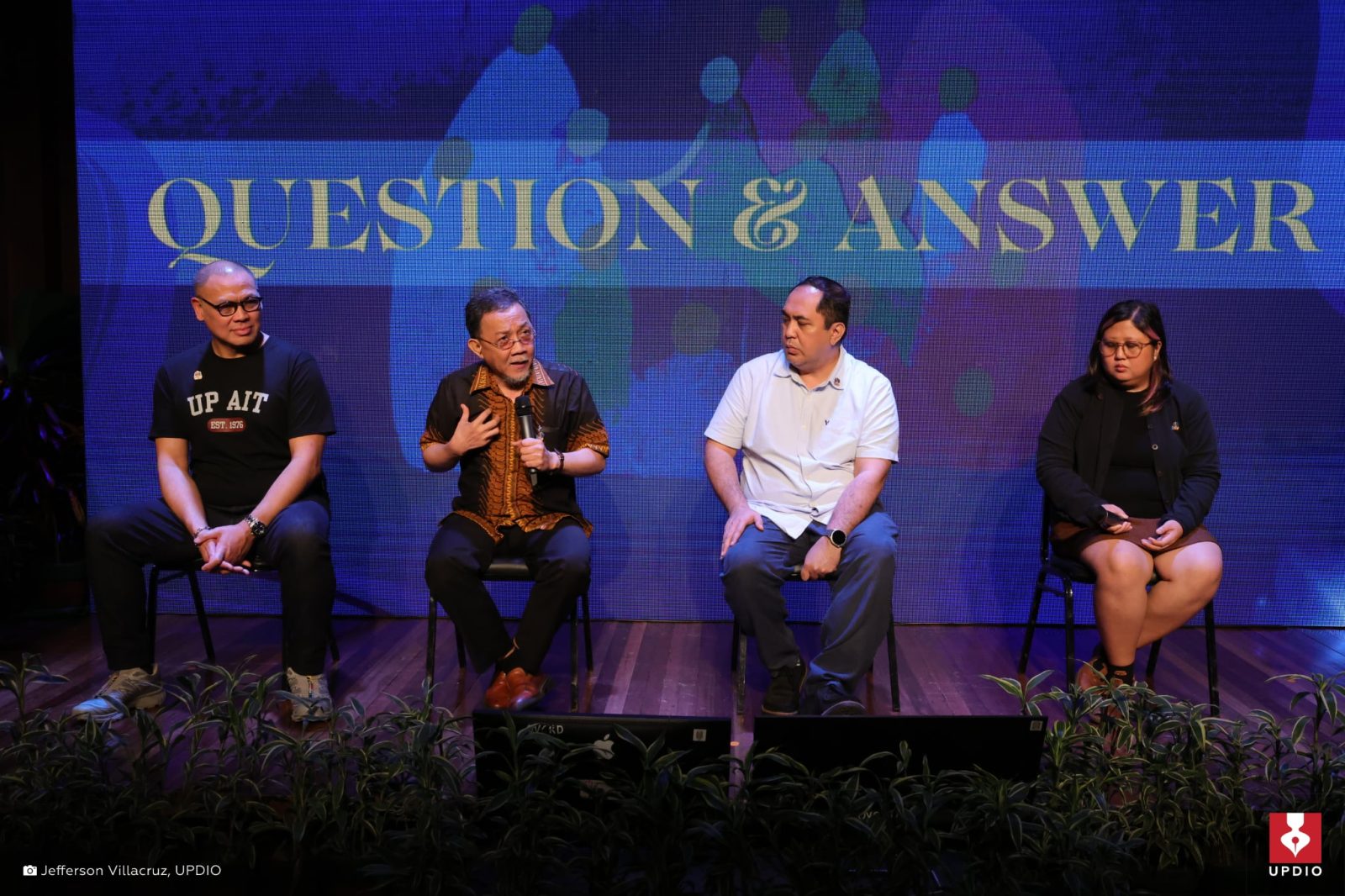
Legaspi discussed AIT’s partnership with Mindanao State University Tawi-Tawi in developing a halal tourism heritage trail in Simunul and Tabawan, Tawi-Tawi, centered on the historic Sheikh Karimul Makhdum and Langgal mosques. The project integrates faith-based tourism with community engagement, environmental stewardship, and heritage preservation.
Meanwhile, Wadi recalled his childhood amid conflict in Sitio Sionogan, Indanan, Sulu, and his serendipitous encounter with scholar Cesar A. Majul, whose explanations and insights helped answer his long-held questions about the conflict in Jolo. Majul, well-known for his scholarly studies on Islam in the Philippines and in Southeast Asia, served as dean of the then UP College of Arts and Sciences, and is the IIS founding dean.
Wadi said his childhood experiences inspired LIHAL, a community-based extension project that seeks to improve access to education while preserving Tausug Islamic heritage, arts, and language. Inspired by the traditional lihal, or Qur’an stand, the project brings together education, faith, and culture to sustain heritage and promote peace for future generations.
Uyanguren highlighted how their initiative brought together community organizing and the arts to amplify the collective voice of small-scale fishers amid increasing reclamation activities in Manila Bay and Laguna de Bay. Uyangaren said the project seeks to give life to the fishers’ calls for their rights to the fishing grounds, protection of their livelihoods, and environmental conservation to secure a better future for their families. Paglayag at Paglaya is a collaborative project of the CSWCD-REDO, Pambansang Lakas ng Kilusang Mamamalakaya ng Pilipinas, and the Concerned Artists of the Philippines.
Villanueva explained that persistent stigma and discrimination continue to hinder transgender and gender non-conforming (TGNC) communities from accessing HIV services in the Philippines. These prompted her team to conduct an extension project that would strengthen a more inclusive and community-responsive care. The project brought together peer navigators, case managers, and community-based screening providers to develop a Community-Care Manual for TGNC-affirming HIV services. Drawing on frontline experiences, the manual provides guidance on access, counseling, referrals, and provider well-being. The manual recognized that people who deliver sustained community care also need support.
“This is what Saliksik Diwa is about. We do not just conduct research, Saliksik Diwa represents the spirit of research oriented toward the soulful betterment and service to the community,” Vice Chancellor for Research and Development Carl Michael F. Odulio said.
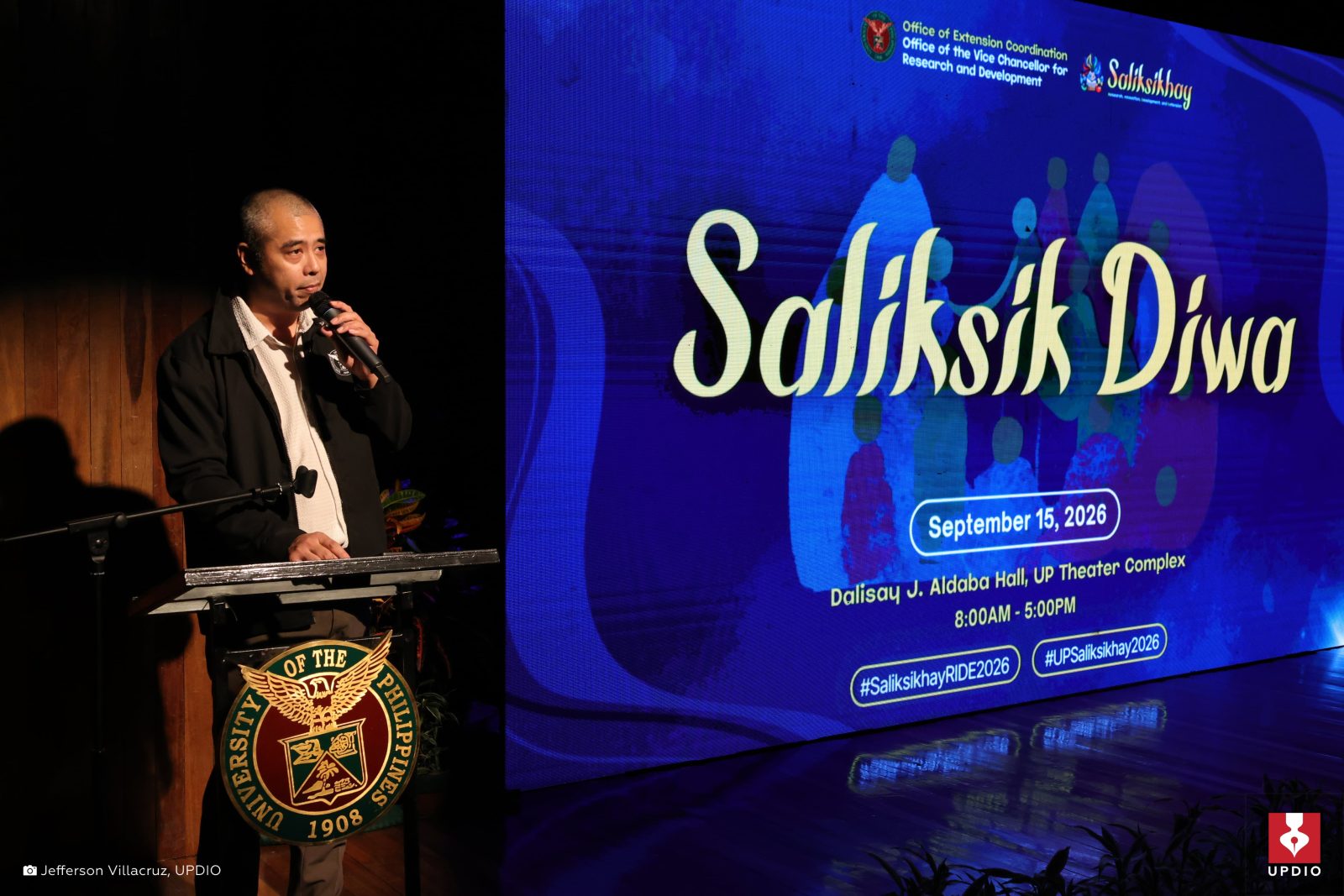
He underscored the growing number of extension projects and the need to focus not only on completing grants but also on their long-term impact on communities. To support this, Odulio said they are planning to establish a committee next year to continuously monitor and assess project outcomes. Funding will also be increased to enable more meaningful community service.
Saliksik Diwa was held on Sept. 15 at the Dalisay J. Aldaba Hall.