
Nearly 300 participants from the academe, government, and industry came together to discuss Philippine energy security and disaster resilience during the Third National Electrical, Electronics, and Computer Engineering Conference (NEECECON).
The annual symposium organized by the UP Diliman (UPD) Electrical and Electronics Engineering Institute (EEEI) this year had the theme Integrating Intelligent Systems for a Resilient Philippines. The conference featured over 40 research papers (24 oral presentations and 17 posters) on intelligent power and energy systems, electronics and semiconductor technology, communications and network engineering, computer science and artificial intelligence, cyber-physical systems and robotics, and engineering education and policy.
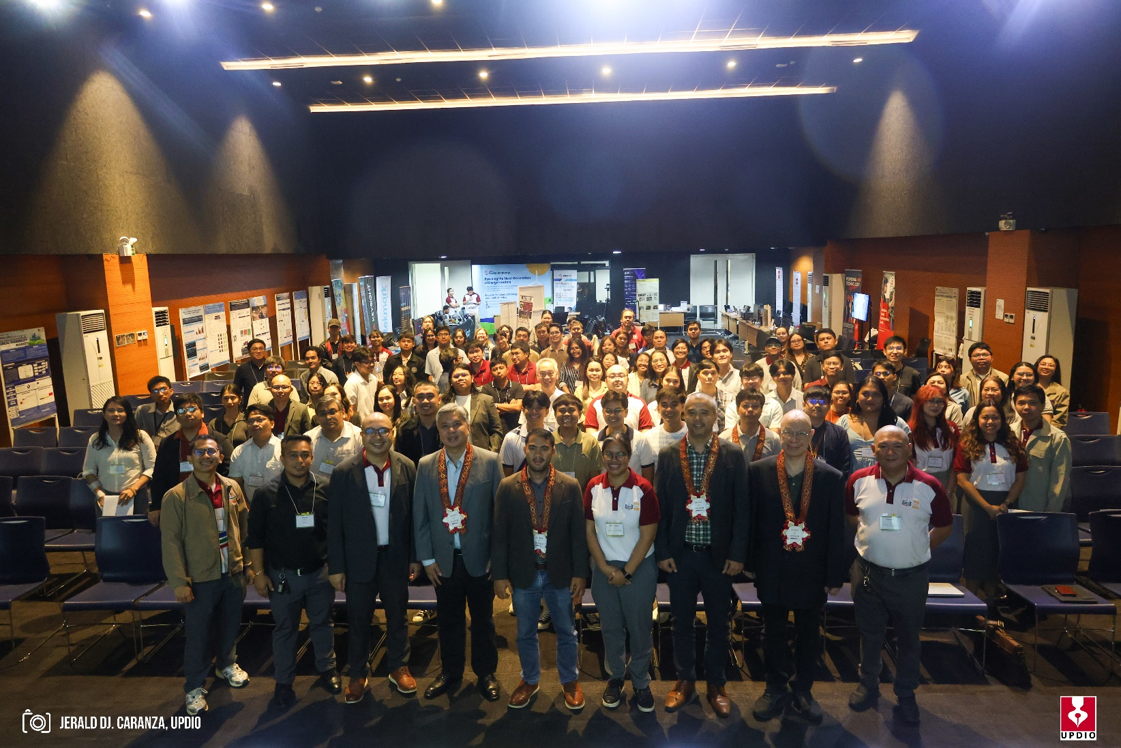
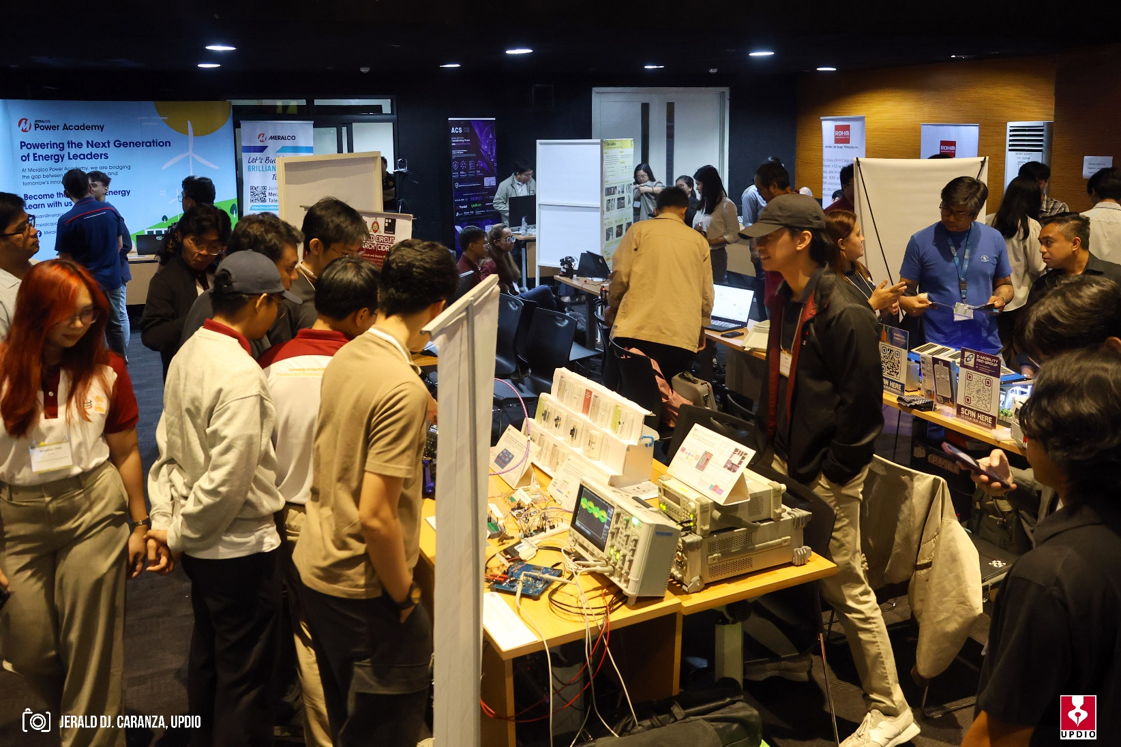
NEECECON featured a series of lectures and panel discussions that explored how data analytics and intelligent systems can strengthen Philippine resilience to both disasters and the changing nature of energy usage.
One such keynote lecture was Powering the Energy Transition: Building the Intelligent Grid of the Future by Lendl Alunan.
A senior manager for design engineering at Analog Devices, Inc. and a UPD alumnus, Alunan described the forces driving the changing nature of power generation and distribution in the Philippines; from one mainly powered by fossil fuels to one that increasingly integrates renewable sources such as solar and wind.
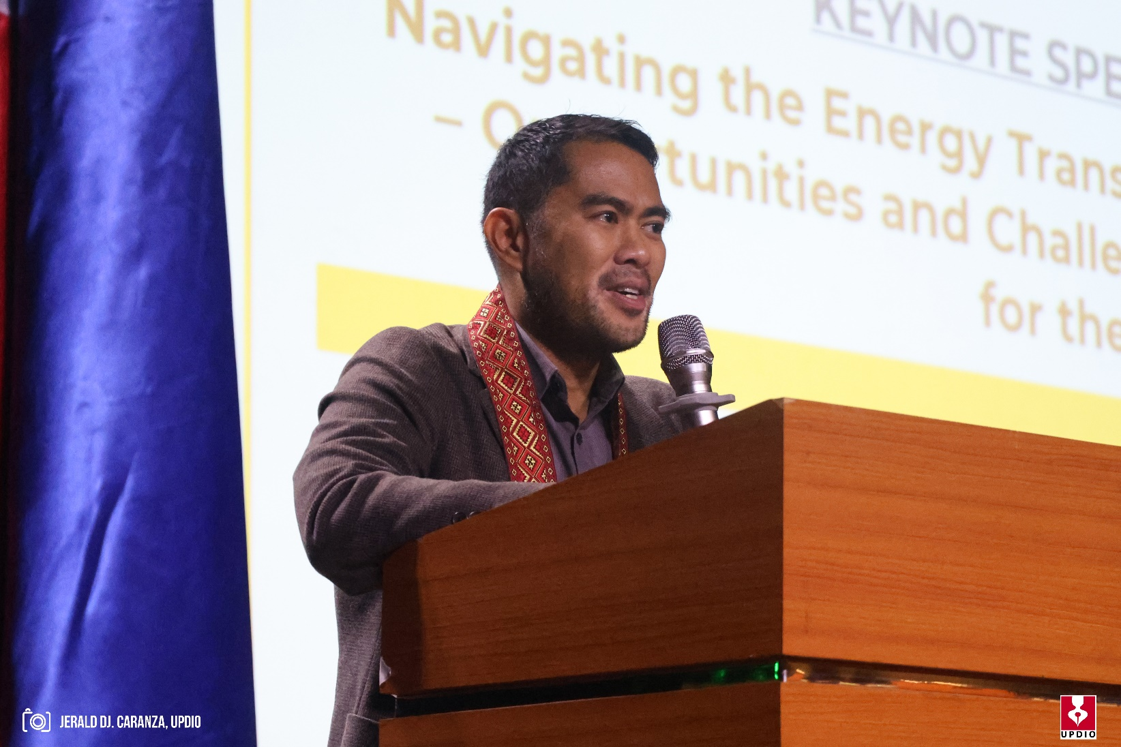
“The [Philippine power] grid was designed for power flowing from large power plants to customers. And now there are thousands or even millions of homes and businesses that are also generating their own power. And the grid must learn how to manage this two-way flow. This creates problems for the utilities because they must carefully coordinate switching on huge amounts of generation very rapidly throughout the day and peak energy need,” he said.
Alunan challenged academics to come up with forward-thinking, harmonized solutions that could collectively solve these various needs.
“What I would suggest is to have both systems thinking and also at the same time look into the details. Usually kasi nade-decouple iyong dalawa, having to think on a broad horizon, looking at all the different markets and the fields into play, nawawala iyong details. And I suppose that’s where microelectronics goes into play as well kasi the engineers who are working on those chips are used to looking at details.…It always has to be married to the end application as well. [W]e need people who will think through that,” he said.
Other research work presented include Evaluating Resource Adequacy Using Hourly 40 Weather-Year Data under High VRE Penetration for the Luzon, Visayas, and Mindanao Grids in Alignment with the Power Development Plan (2023-2050) by researchers Rafa Judah Tirones, Ryan Jay Vico, and Adonis Emmanuel Tico, an associate professor at the EEEI; and Evaluating the Effectiveness of a Model-Free Hosting Capacity Approach for Solar PV Distributed Energy Sources by researchers Julce Ivan Cunanan, Julliane Yzabella Layno, and Jordan Rel Orillaza, a professor at the EEEI.