
At a colloquium about research integrity in music and sound studies, keynote speaker Nina T. Castillo-Carandang, PhD suggested a Filipino approach to research integrity grounded in pakikipagkapwa sa pananaliksik.
A professor of health sociology and global health at UP Manila Department of Epidemiology, Castillo-Carandang explained, “responsible conduct of research rests on respect for persons, beneficence, and justice. Principles everyone agrees on but never applied in a vacuum. Their meaning is shaped by culture, relationships, and power every time.”
Castillo-Carandang emphasized that context changes everything because, “the questions we ask shape what we see, what we do, and how we relate to one another. If we want research to be more honest, fairer, [and] more humane, we have to be willing to change how we see and how we understand things in the first place.”
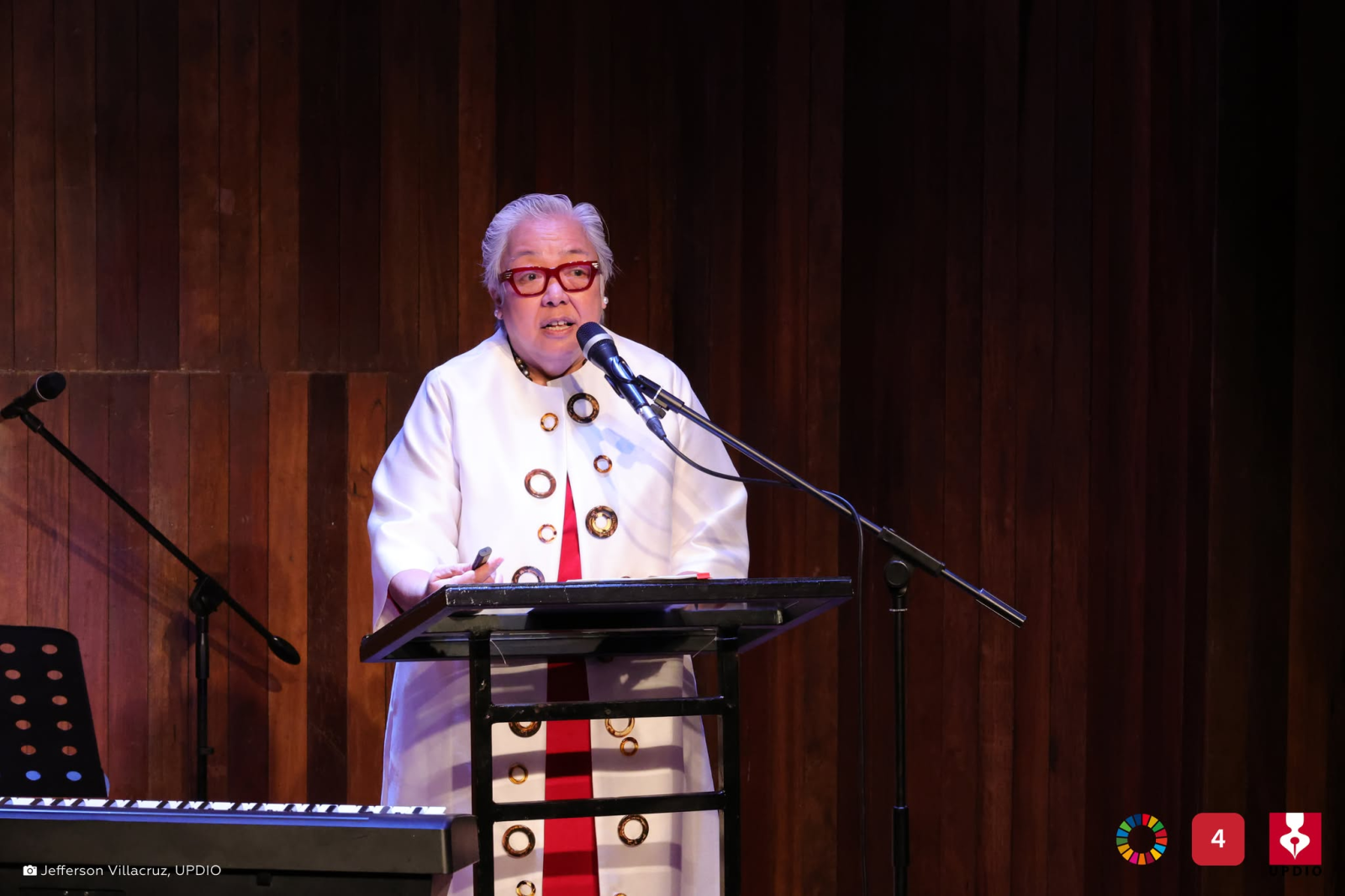
She said music matters to research integrity because music makes visible questions that many fields of study can quietly avoid.
“In music and sound, knowledge is performed, heard, and felt, not just written down. Authorship is often shared, contested, or generally collective. And research here can become either extraction or partnership, depending entirely on how it is done. Questions of ownership, consent, and representation are never far from the surface,” Castillo-Carandang explained.
According to her, music and sound studies challenge the academics, researchers, and students to see research integrity not just a matter of rules, but as a matter of relationships, of kapwa, responsibility, justice, and care, where the core principle is “to treat fellow researchers, artists, musicians, and knowledge holder as kapwa, and not just as research subjects.”
Her call to action was to “embrace pakikipagkapwa sa pananaliksik—perceive, listen, create, collaborate, educate, institutionalize.”
Castillo-Carandang based her keynote speech at the UP Center for Ethnomusicology (CE)-organized colloquium, Listening, Perceiving, Creating: Exploring Research Integrity in Music and Sound Studies, on her Sariel and Andie Ablaza Professorial Chair in the Basic Sciences lecture, Exploring Research Integrity in Music and Sound Studies: Context, Challenges, Tensions, and Constructive Pathways.
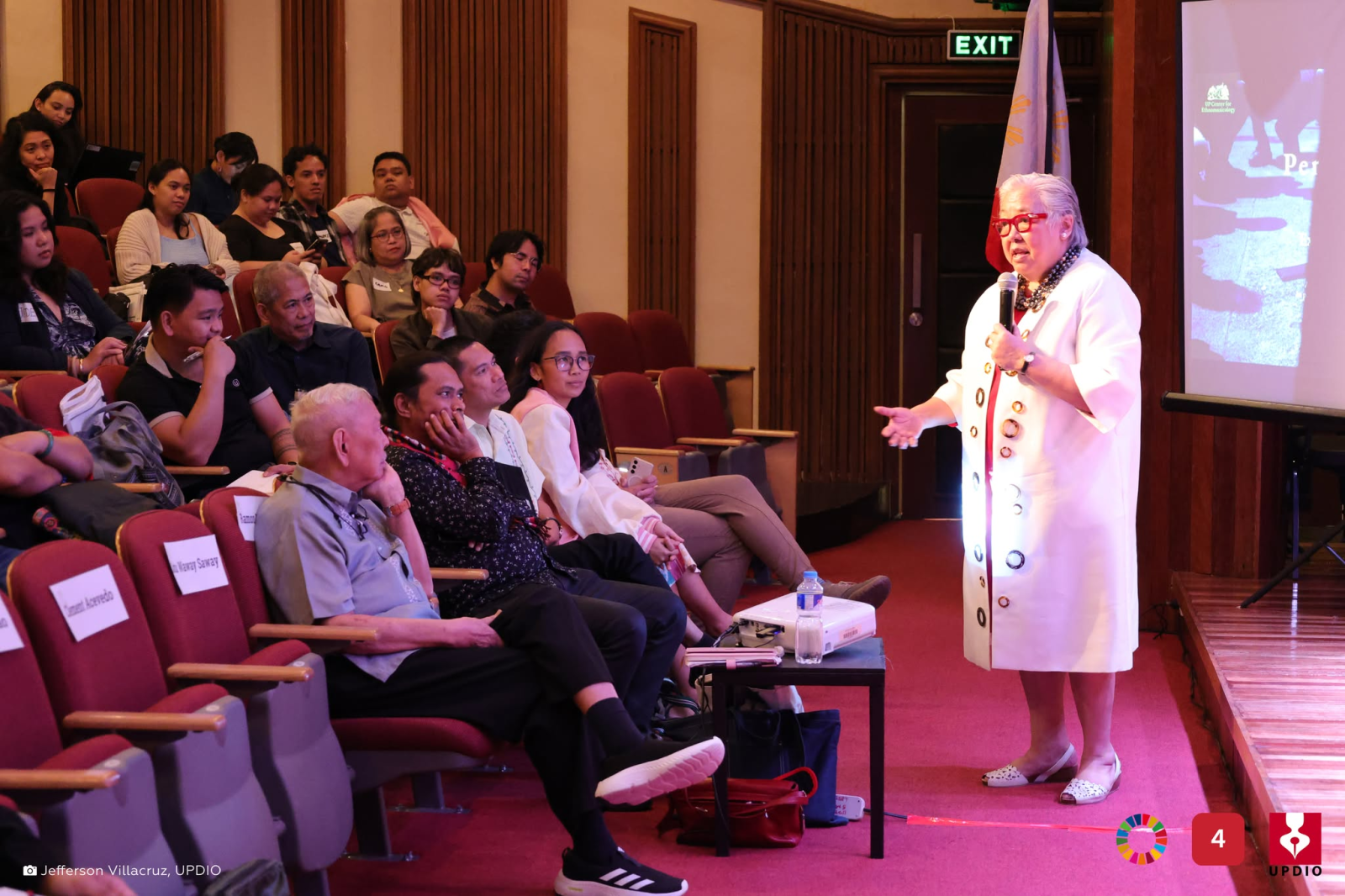
The colloquium last July 21 at the Aldaba Hall consisted of three sessions: Trajectories in Composition, Artistic Interpretation, and Epistemic Justice; Close Mediations of Indigenous Realities; and Adaptions, Innovations, and Authenticities.
Trajectories in Composition, Artistic Interpretation, and Epistemic Justice, featured National Artist for Music Ramon P. Santos, PhD; Clement B. Acevedo, DMA, an assistant professor at the UP Diliman (UPD) College of Music (CMu); and meLê Yamomo, PhD, a composer and performance studies scholar at the University of Amsterdam in The Netherlands.
Santos, in his lecture Researches into Theories and Concepts of Tradition and Modern Compositional Structures, said “in doing research, one must look into all the angles and dimensions of the traditional practices, not only the sonic dimension, but also the theoretical as well as conceptual, social, and functional properties of these expressions. This will enable the scholar or researcher to point out differences and similarities between genres and general practices in order to identify the uniqueness of each and every expressive act, whether it is structural or abstract in nature, societal or cultural, metaphysical or philosophical.”
Close Mediations of Indigenous Realities, showcased the lectures of Eulalio R. Guieb III, PhD, a professor at the UPD College of Media and Communication; Nelson S. Dino, a Tausug culture bearer and scholar from the Mindanao State University Tawi-Tawi; Elvert Bañares, a filmmaker; and Jesus Insilada, EdD, a teacher, writer, and Panay Bukidnon culture bearer.
Adaptions, Innovations, and Authenticities, highlighted the lectures of Anna Patricia R. Carranza, an assistant professor and chair of the CMu Department of Music Education; Datu Rodelio “Waway” Saway, a local leader at Bukidnon, multimedia artist, and Talaandig culture bearer; and John Owen Castro and Andrew James Jiao, songwriter-musicians of the Munimuni Band.
Colloquium performers were the UP Padayon Rondalla and UP Junior Music Educators’ Guild Chorale.