
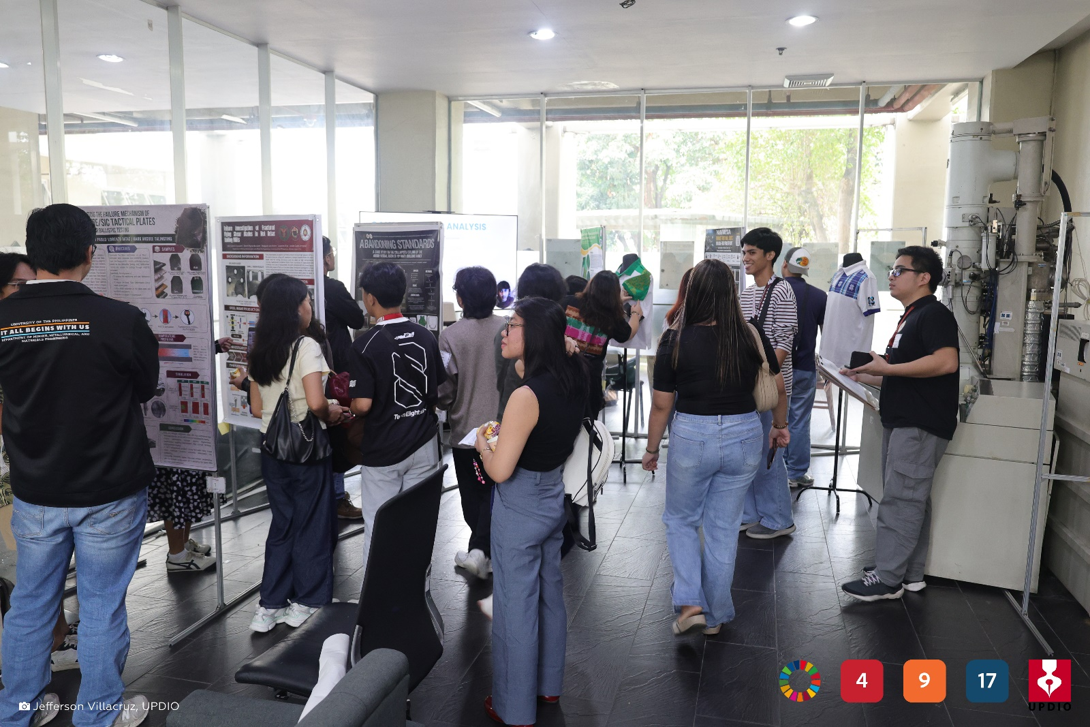
Just one year after its establishment, the UP Diliman (UPD) Failure Analysis Hub (FA Hub) moved forward in bridging the gap between academic expertise and industry with Interface 2026, a symposium that featured presentations from both the UPD Department of Mining, Metallurgical, and Materials Engineering (DMMME) and industry partners.
The FA Hub, based at the DMMME, is a dedicated facility established to centralize and advance the DMMME’s specialized capabilities by providing comprehensive investigations into material reliability and complex engineering failures.
Failure analysis is a multidisciplinary field in materials and metallurgical engineering that analyzes how and why materials like concrete or metals fail or break down and stop functioning as they should. It is highly sought after and applicable in different industries, especially those that rely heavily on machinery such as manufacturing.
Symposia that feature research from both industry and academe is not rare or new. However, according to FA Hub Program Leader Stan Kristine Ejera, an event like Interface 2026 shows that failure analysis can be done at the same level in UPD.
Ejera, who is also an assistant professor at the DMMME, said failure analysis is largely outsourced to foreign firms or to one of a handful of entities in the Philippines.
“[I]n general kasi, sa engineering landscape hindi masyadong tina-tap iyong academe when it comes to consulting in terms of failure analysis. Usually, kapag failure analysis either they tap foreign consultants [and] foreign firms. Medyo nakakalungkot kasi within UP, marami namang capable of doing failure analysis,” he said.
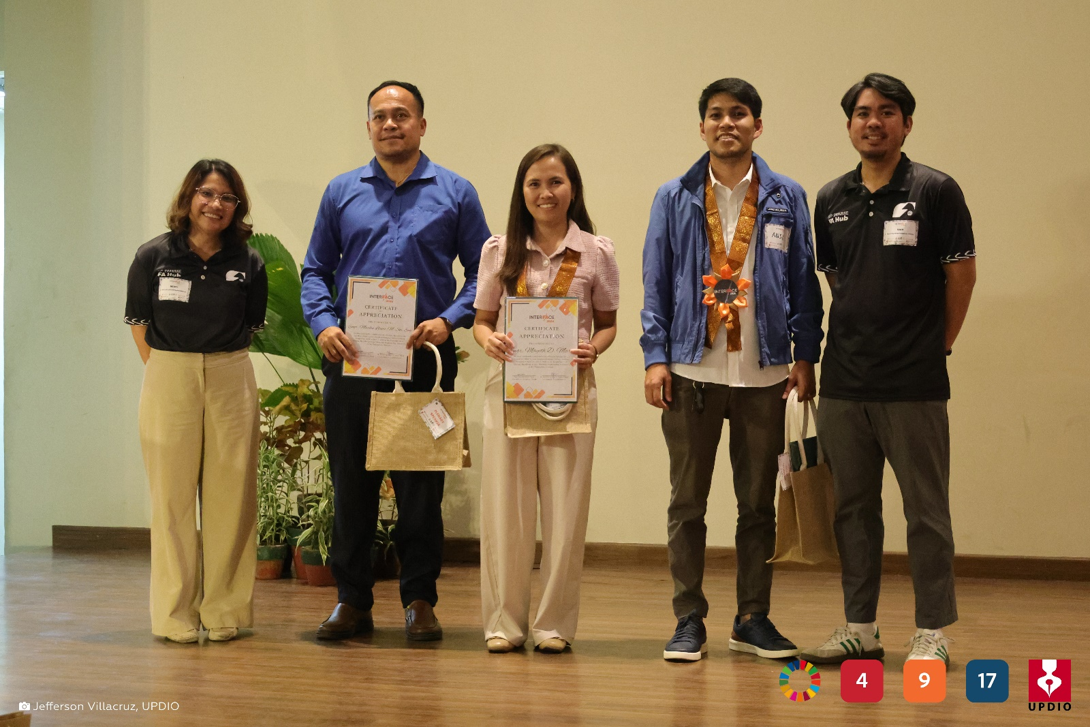
Interface 2026 featured a plenary talk from Mayeth Marco of SEM-Calaca Power Corporation and Ansel Rom Mendoza of Southwest Luzon Power Corporation. Both speakers said working with the FA Hub produced results that were not only comparable to those of foreign consultants, but were also conducted faster and more efficiently.
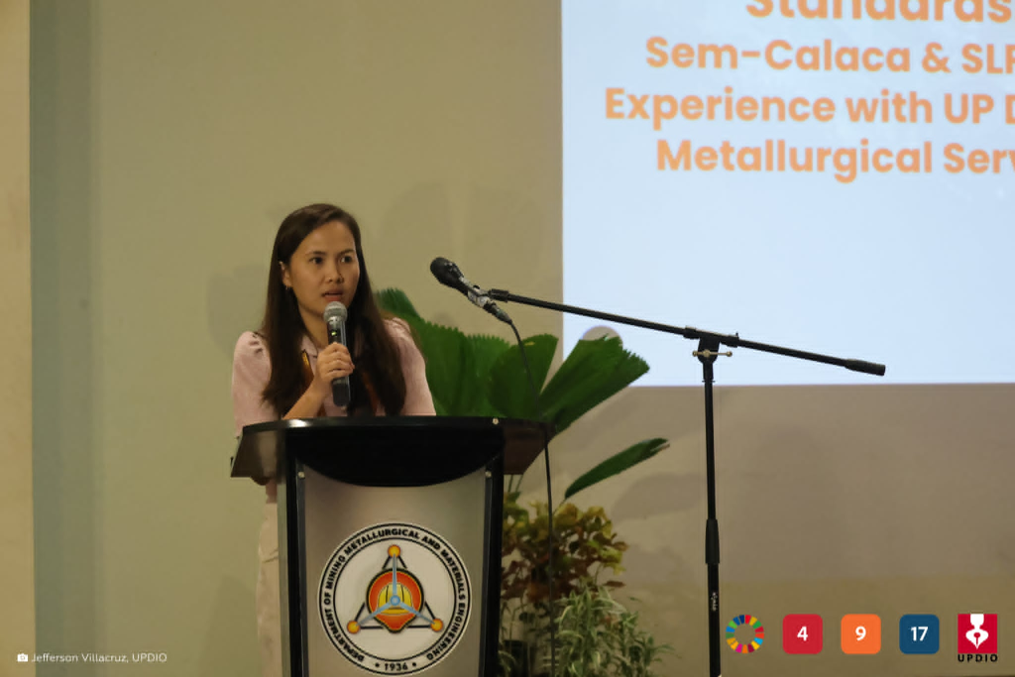
“They demonstrated technical capabilities that effectively supported our reliability and asset integrity objectives. Second, the value of engagement extended beyond technical reports through meaningful collaboration, responsiveness, and knowledge transfer. Third, local expertise can provide significant economic value while maintaining the quality and depth of technical deliverables required by industry. And finally, our experience reinforced the belief that Filipino engineers and metallurgists possess the ability to support critical industrial assets at a level that meets global expectations,” Marco said.
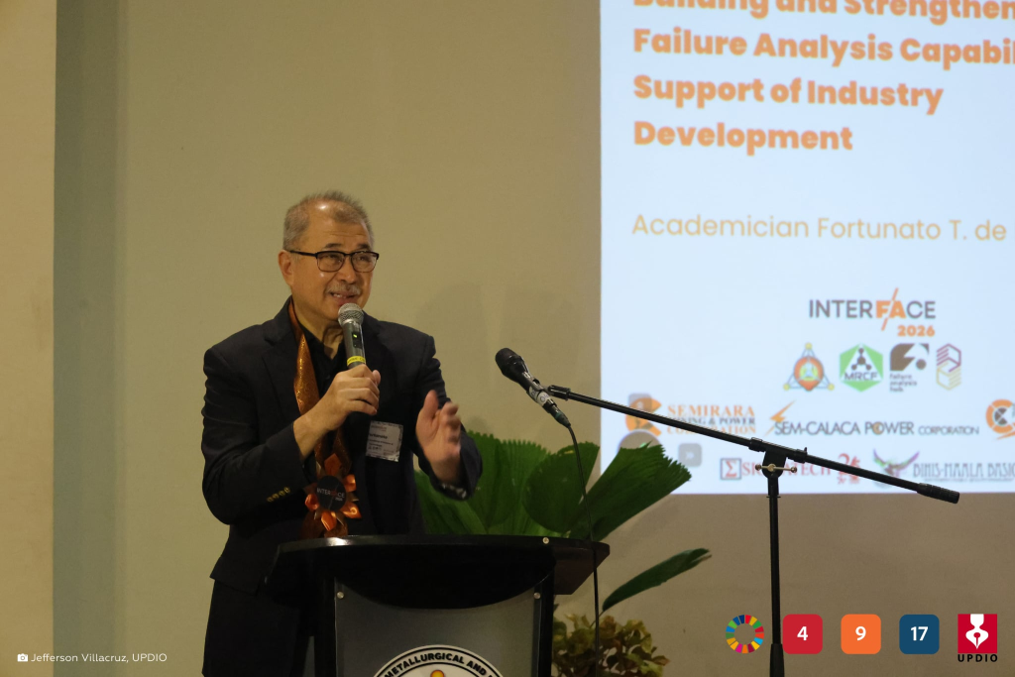
Interface 2026, held on June 5 at the DMMME building, had as its keynote speaker NAST Academician and former Department of Science and Technology secretary Fortunato T. de la Peña.
The event also featured oral case study and poster presentations from students taking failure analysis-related courses the DMMME offers, with topics ranging from ballistic analysis of pineapple fiber-reinforced armor to the analysis of boiler tubes in a coal power plant.