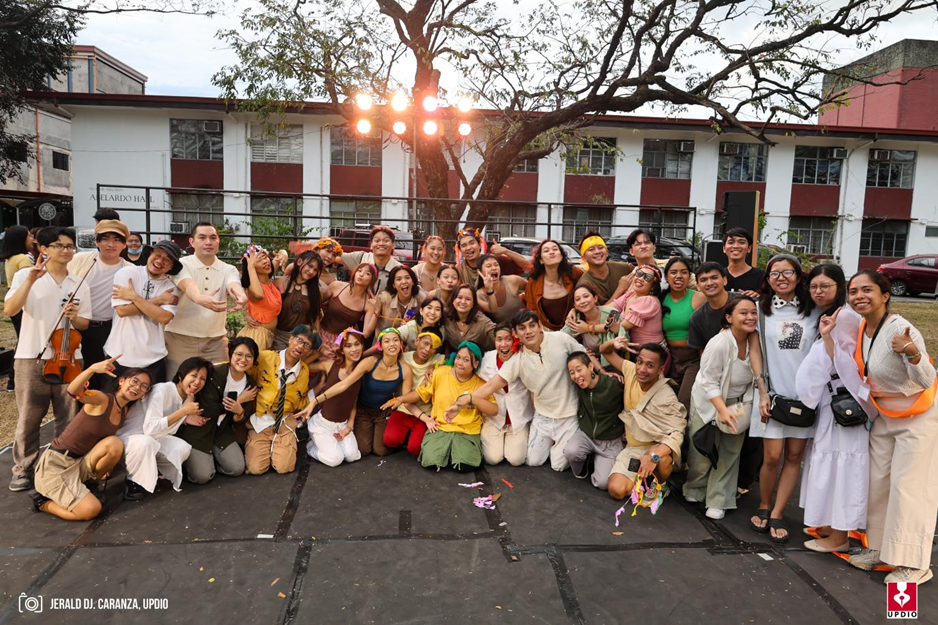
Can a blind person experience the joy of dance together with other blind people and those with sight? How?
These were the main questions Thai blind artist Toffee Sophon Tabklong (Toffee) posed.
In his desire to include visually-impaired persons in a creative society, Toffee’s questions, together with Nitipat Ong Pholchai’s (Ong) questions, gave birth to Blind Together.
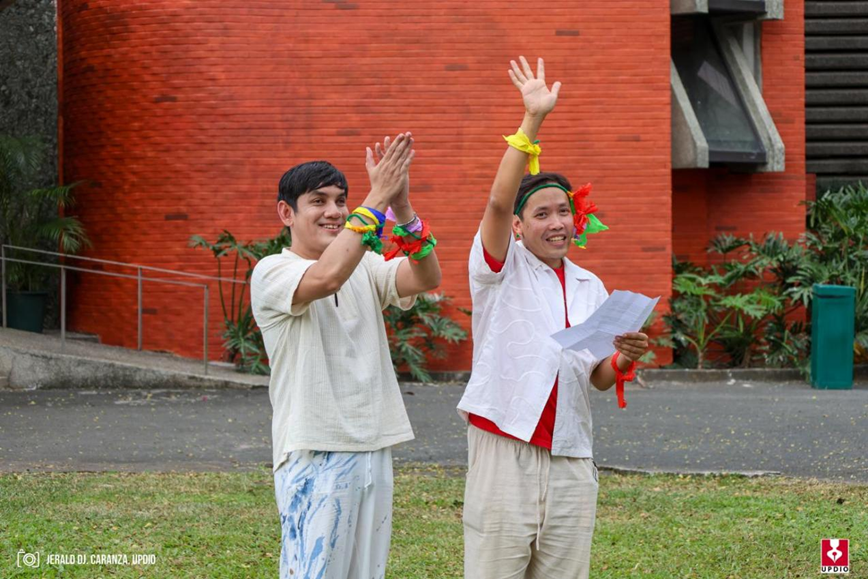
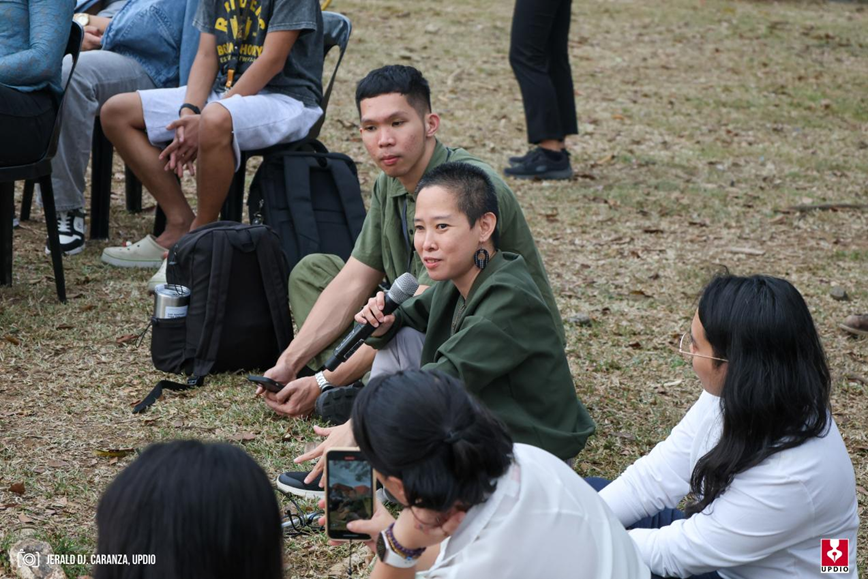
“How do we meet with others across sensory differences? What if blindness is not a limitation but an alternative way to touch, to listen, and to learn about ourselves, about others, and about our environment differently?” Ong asked.
Blind Together is an inclusive dance project that centers blindness as a creative potential.
Toffee and Ong’s questions were the driving force for this initiative which was born in Thailand and is now in its second year.
Blind Together was brought to the Philippines as part of the UP Diliman (UPD) Arts and Culture Festival 2026.
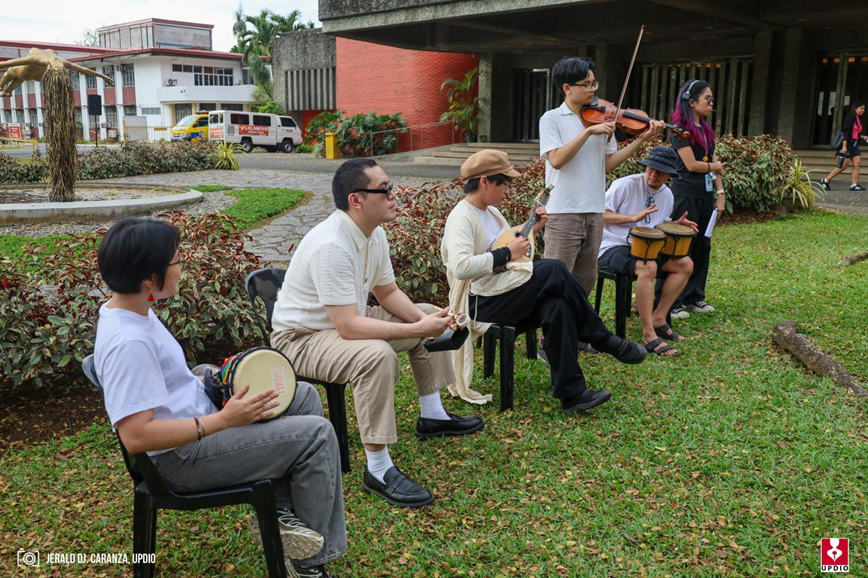
It featured the performances from Toffee and Ong, a walking as blind tour for a volunteer audience member, and performances from the three volunteer groups.
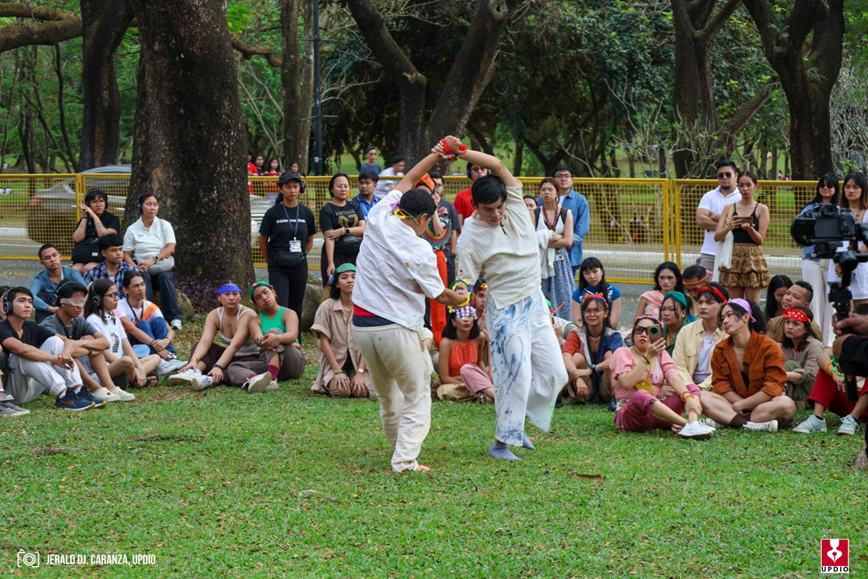
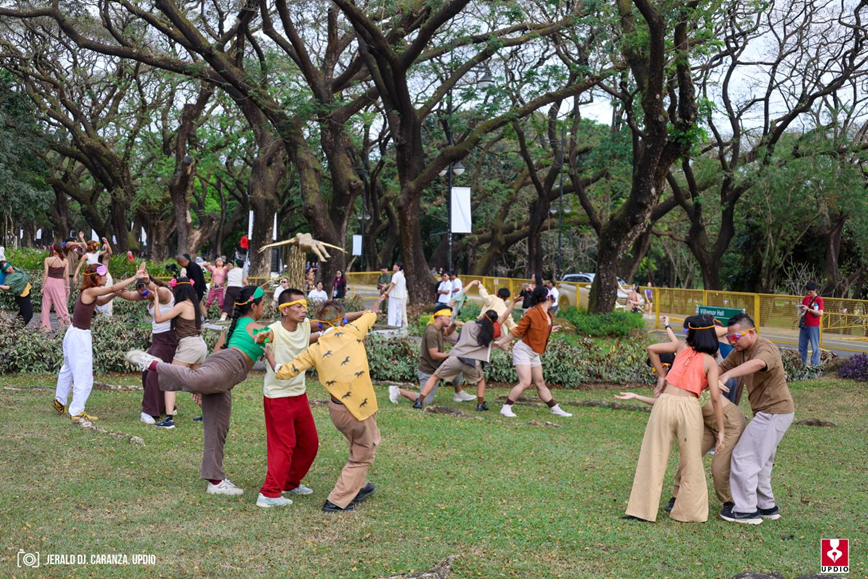
Apart from the performance, Blind Together held a workshop.
The workshop was held with the assistance of the UP Dance Company (UPDC) on Feb. 9 at the UPD College of Music (CMu) Dance Studio, while the performance was held on Feb. 13 at the lawns of the University Theater and of the CMu.
Ong, a Thai movement artist, researcher, and educator, facilitated the workshop joined by 33 volunteers.
The volunteers, a combination of seeing and visually-impaired persons, registered for the project as early as the second week of January, and have been rehearsing prior to the main workshop. They are UPD faculty members and students, members of the blind community, and other independent artists.
“How do we meet with others across sensory differences? What if blindness is not a limitation but an alternative way to touch, to listen, and to learn about ourselves, about others, and about our environment differently?” Ong asked.
He explained that for the past two years they explored “these questions with communities across Southeast Asia, and we are so grateful to have been welcomed so heartfully by the UPD community in the Philippines.”
Ong hoped that there will be more similar inclusive projects for the blind community.
Meanwhile, Director Monica Fides Amada W. Santos of the UPD Office for Initiatives in Culture and the Arts (OICA), said the project rendered their office to have a steep learning curve to navigate and make the show truly inclusive for the blind community. OICA is the lead UPD unit for this project.
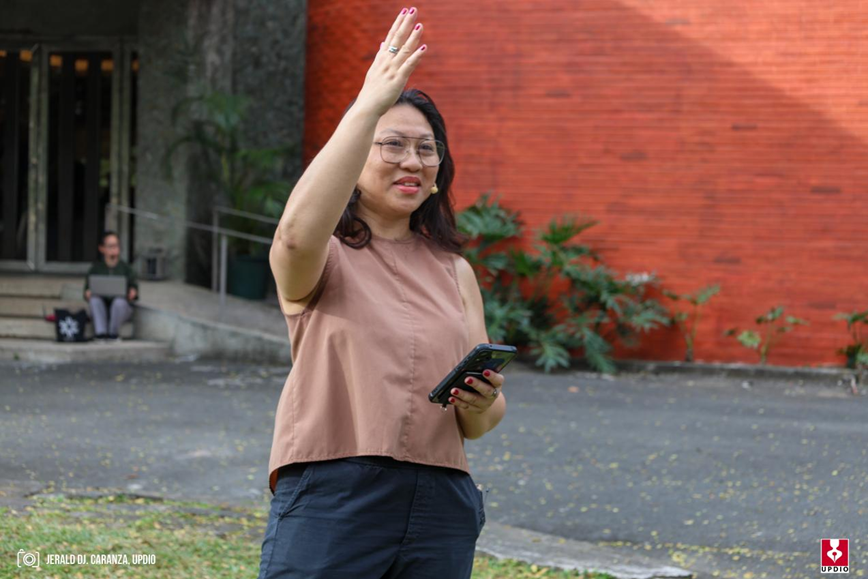
“This project showed us that inclusivity needs to be embedded in our consciousness and articulated in our planning,” Santos said.
The volunteers also shared their experiences after their performance.
One volunteer said, “through this project, we were able to empathize with the plight of the blind community,” while another shared, “when we closed our eyes and trust our guides during the whole performance, I felt I was one with the blind community experiencing their daily challenges in our society.”
A volunteer who lost his vision in 2021 said, “this project made me realize that I can still enjoy my creativity and be part of a group which explores how blind people can maximize their potentials.”
Organizers of Blind Together include UPDC Executive Director and Faculty Adviser Angela Lawenka-Baguilat, current UPDC executive director and faculty adviser; Al Bernard Garcia, UPDC artistic director; Eva Marie Wang, PhD, founder and convenor of Hiraya Collective for the Blind (Hiraya Collective); CMu administration; University Theater Complex; and the Tourism Department and Persons with Disability Affairs Office of the Quezon City government.
Hiraya Collective provided the headsets and live narrative description for the event for the visually-impaired audience members.