
Film historian and filmmaker Nicolas Francisco “Nick” A. Deocampo has recently discovered what is now considered the oldest surviving Filipino film—the 1936 production Diwata ng Karagatan (Diwata)—in Brussels, Belgium.
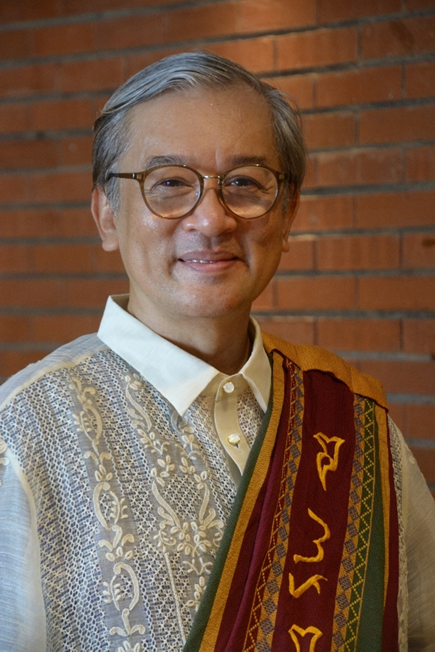
“I was in Brussels in the 1990s, joining some film festivals and winning some awards. And I visited the archive, Cinémathèque royale de Belgique [Royal Belgian Film Archive / Cinematek]. I left some word and told them ‘if you find anything about the Philippines, please let me know,’” Deocampo said during an online interview with PhilSTAR L!fe.
Last October, while in Frankfurt Book Fair, Deocampo asked Cinematek, through Louise Baterna-Hubert who is in Belgium, if it has a copy of any old Filipino film. Baterna-Hubert is the daughter of pioneering Ilonggo-language film director and producer Quin Baterna.
Baterna-Hubert said Cinematek confirmed possessing a copy of an old Filipino film in their archive, but the staff was not sure if it was what Deocampo was seeking.
According to Deocampo’s Facebook page, “on Oct. 28, we [Deocampo and Baterna-Hubert] found ourselves watching the only-known existing copy of the vintage movie being played on a Steenbeck editing machine. We were accommodated at the venue by Bruno Mestdagh, coordinator for digital film collection and restoration. The film exists only in a 35 mm print, as no copy has yet been digitized.”
Deocampo explained in his post that Diwata’s discovery is doubly historical because it “is the first and perhaps the only film that is extant that was produced by the Father of Philippine Cinema, Jose Nepomuceno. Despite rumors of some films attributed to Nepomuceno to be existing, none of his films has ever been found.”

He verified that the newly-discovered copy is “certifiably Nepomuceno’s, produced by his pioneering film studio, Parlatone Hispano-Filipino. It is a film he produced but not directed. Instead, it was directed by another pioneering figure, Carlos Vander Tolosa, the same filmmaker who directed the first films to open the movie studios, Sampaguita and LVN, in the 1930s.”
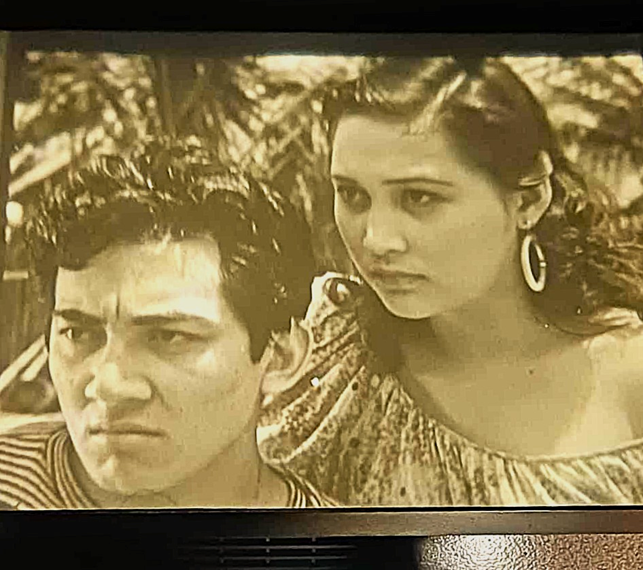
Diwata tells a love story between Jose (Rogelio de la Rosa) and Ligaya (Mari Velez) who live contentedly on an island until a stranger named Wong comes with a gang of his men, wanting the lovely maiden for himself. Deocampo was able to identify De la Rosa and Velez because of his familiarity with them due to old pictures and publicity materials.
After its screening in 1936, Diwata was “re-premiered in 1939 to celebrate its successful exhibitions abroad,” Deocampo said in his post. During the intervening years, Diwata was shown in Belgium, France, and South America.
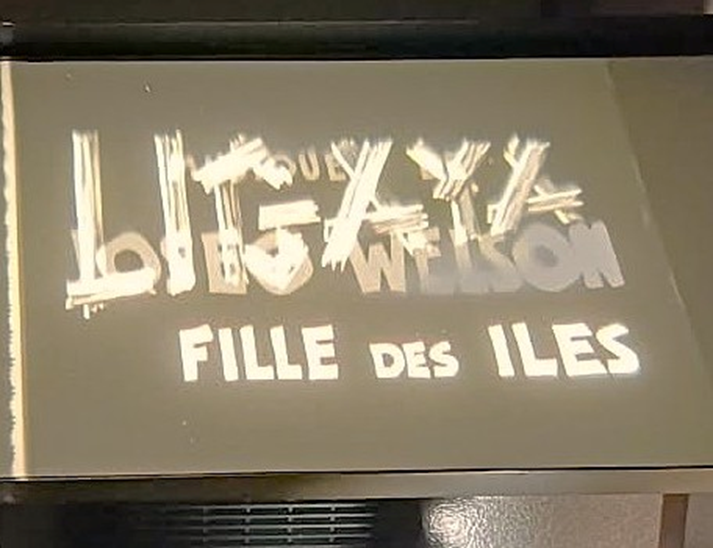
Deocampo believed Diwata was popular in France as it was released in several titles—Ligaya, fille des îles (Ligaya, Girl of the Island) and Wong, le Tyran (Wong, The Tyrant).
“Since after its last exhibition at Fox Theater in Manila, nothing has been heard of it until the war broke out in 1941. All movies in Manila disappeared with the war. Thankfully, a copy of the film has now been found abroad,” Deocampo said in his Facebook post.
He said in the same post that the film’s 1936 provenance “dislodges the claim earlier held by the 1937 Fernando Poe Sr.-starrer, Zamboanga, as the oldest Filipino pre-World War II movie, a film that I also discovered abroad while on a Fulbright-funded research scholarship at the Library of Congress in 2004.”
Deocampo believed that the film fell prey to film piracy. Thus, it had been difficult to decipher Diwata’s country of origin, cast names, and credits.
After viewing Diwata, he determined that the version preserved in Belgium—running only 52 minutes—was likely trimmed from a longer original by a French promoter, Gabriel Pallu. To market the film as a French production, scenes were rearranged, names of Filipino cast and crew (including Nepomuceno and Tolosa) were deleted, and replaced with French credits, effectively masking the film’s country of origin.
“Kaya nga this accusation of piracy is gaining some validity because why would you erase the country of origin from where the film came from. Kung hindi ka pirata, bakit mo itatago iyong country of origin,” Deocampo said in his interview with PhilSTAR L!fe.
With more than 200 pre-war Filipino films believed to be in foreign film archives, Deocampo hoped the national government will provide a budget for film research, restoration, and preservation so that new Filipino generations may still enjoy the Filipino film legacy.
Deocampo recently retired from the UP Diliman (UPD) College of Media and Communication faculty. He earned his master’s degree (cinema studies) from New York University under a Fulbright scholarship grant in 1989, and his bachelor’s degree (theatre), cum laude from UP in 1981.
He has received numerous accolades, including The Outstanding Young Men of the Philippines (1992), Ten Outstanding Young Persons of the World (1994), and the UPD Gawad Tsanselor para sa Natatanging Guro (2023).